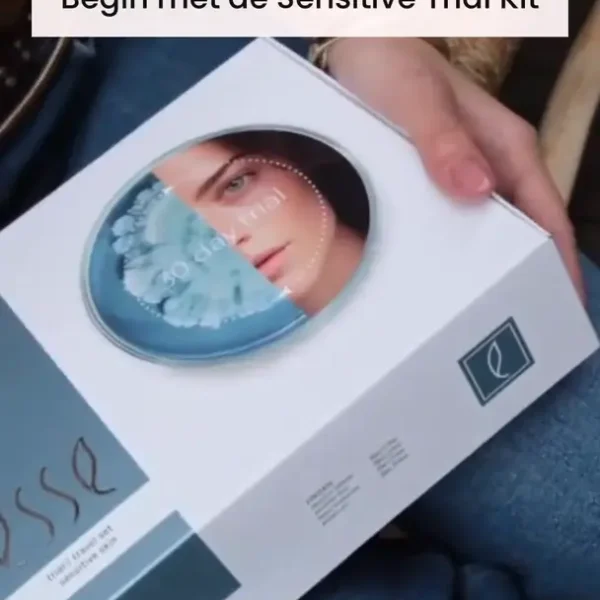
Do you also smear all-purpose cleaner, plastic and petroleum on your body every morning? Probably so!
 Today I read a super interesting article by Robbert ter Weijden on the kro/ncrv site and I would like to share it with you:
For our examination of cosmetic products, we call journalist and publicist Robin van Wechem. She is author of The Anti-wrinkle Complex. In this book, Robin delves into the back of the cosmetics industry. What exactly is in the many cosmetics we widely use? And, what is true of the fine promises with which these products are touted? Following her findings, Robin is concerned about the content of many articles.
‘Especially shocking is the amount of plastics and other chemicals used in the products. I went to a trade show of raw materials for the cosmetics industry. There, all chemical giants such as BASF, Bayer, Shell and Merck were prominent. That actually says enough about the key ingredients in cosmetics.
So the cosmetics industry is primarily a chemical industry. According to the Dutch Cosmetics Association, an average product contains between ten and fifty different ingredients. But a complex perfume can have up to 170 different ingredients.
Aircraft fuel and aluminum
Many deodorants contain aluminum; according to Van Wechem, some products contain up to 30 percent of this metal. She also distinguishes synthetic ingredients; petroleum derivatives such as jet fuel that are reprocessed into cosmetic ingredients. And then you have the plasticizers or so-called phthalates that can also be in toys and food packaging.
‘Phthalates are in synthetic perfume, to ‘fix’ the smell. Some phthalates have been linked to endocrine disruption, but many other variants have not yet been well studied. In cosmetics, some phthalates are banned. That just doesn’t mean that the variants that are still allowed to be used are automatically safe.
Water and soap
By the way, most products contain a raw material that at first glance seems harmless: water.
Van Wechem: “But to make sure that fungi and bacteria don’t get a hold of them, preservatives are added. And these are aggressive substances. Other substances we know from all-purpose cleaners include sodium lauryl sulfate (SLS) and sodium laureth sulfate (SLES). Especially the former are in all-purpose cleaner but also, in lower concentrations, in shower gel and shampoo.
Cleaner or dirtier?
So in our need to become cleaner, smoother and more beautiful, we smear all kinds of chemicals on our bodies. Are we making ourselves sick with all these resources? According to Van Wechem, this is mainly due to how much we use. And there’s a catch. On a product-by-product basis, the percentages of individual ingredients may be permissible, but what the effect of all those agents combined is unclear.
‘Consumers sometimes use as many as ten different products a day from soap and shampoo to toothpaste, deodorant and makeup. It does take into account the possible effects of this addition based on estimates. But we still know virtually nothing about how the various substances in the product (every cosmetic product is a mixture of many different substances) react to each other and what exposure to those mixtures does to skin and health.
We of WC duck
So what about the control of all these products? Authorization policies for cosmetic ingredients are stricter in Europe than in America, where regulation is mainly left to the market. Europe has an expert panel that evaluates cosmetic ingredients before they are allowed on the market. This Scientific Committee of Consumer Products, the SCCS, also later re-evaluates the products.
“The problem with that is that this committee depends on the studies and files provided by the industry itself,” Van Wechem said. ‘The expert panel itself does not investigate ingredients and the concentration in which they are used in a product. As far as enforcement is concerned, in our country the Dutch Food and Consumer Product Safety Authority is responsible, but it is common knowledge that it has far too little capacity, so it limits itself to a sporadic sample in this matter as well.’
You can read the article here.